
Over the course of the 2025-2026 academic year, I was part of Rogue Aerospace's efforts to develop Brooklyn's first hybrid rocket, Perserverance (pictured above). The final vehicle came in at a length of approximately 18ft / 5.5m and a wet mass of 97lbs / 44kg. The motor has an impulse of 12,250 N-s and uses liquid nitrous as the oxidizer with a parrafin wax fuel grain. I was personally responsible for the design of the combustion chamber. Design factors included a peak chamber pressure of around 590psi / 4070KPa, an estimated combustion temperature of 3200K, and a nominal burn time of 3 seconds. A report on the design process and calculations is included below.
As of the date of writing (5/31/2026) the combustion chamber has been manufactured and assembled but still needs to undergo hydrostatic testing before it is approved for a static fire and eventual full-scale launch.
A subscale vehicle was also built in the fall as a demonstrator for charge sizing methodology and the fill-to-fire (F2F) section. As a bonus, a small camera unit was mounted into the vehicle to record onboard footage. While the recovery event was unsuccessful due to last-minute changes to parachute sizing, the F2F assembly proved itself and the footage (albeit rather shakey) was able to be recovered.
Perserverence was not my first time working with hybrid rocket motors. Back in 2021 I tried to build one at home using vinyl tubing and a cylinder of pressurized oxygen (the kind you can buy at Home Depot). At the time I was still in high school and knew very little about the idea of properly "engineering" anything, much less how to calculate throat diameter, divergence angle, oxidizer flow rate, heat transfer, etc etc. Still, all of the eyeballing and guestimating resulted in something that one could argue loosely resembles the idea of a functioning rocket motor. And yes, that is a small stick from the driveway being used as the ignitor.
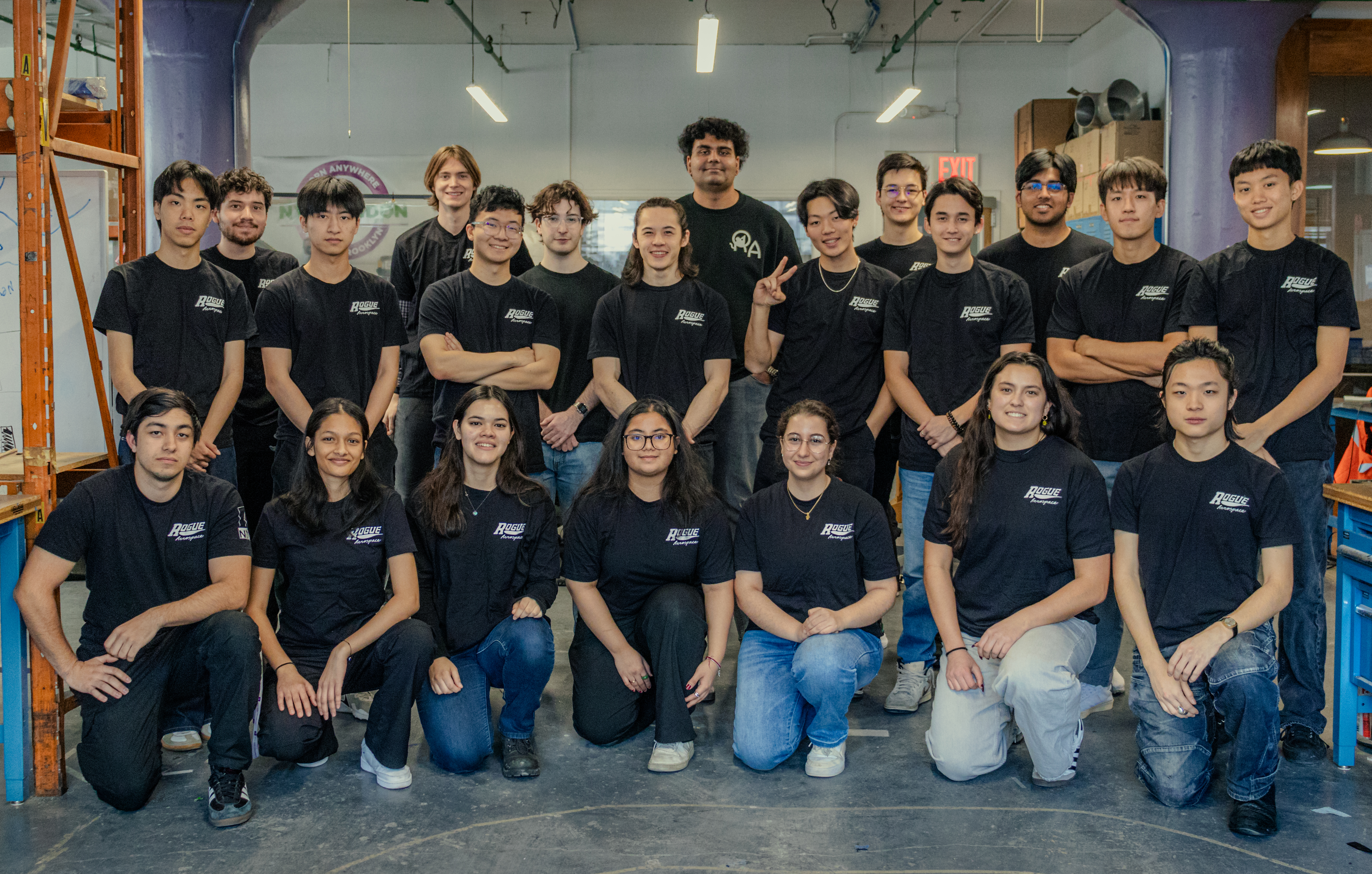
Rogue is NYU's student-run rocketry team which formerly participated in NASA's USLI competition. As of May 2025, the decision was made to step away from NASA and instead pursue independent hybrid rocket development to compete in the Friends of Amateur Rocketry: Oxidizers Uninhibited Tournament (FAR-OUT). This was done to increase the overall scope and complexity of the team's efforts and to expose more students to hands-on engineering practices. I had the pleasure of co-leading both the Propulsion and Electronics teams during my time on leadership, overseeing projects such as the injector, ignitor, cold flow test stand, radio communications, live telemetry, ground support equipment, etc. Check them out at their website.